Fables: Did Socrates write anything?

IMG_0944

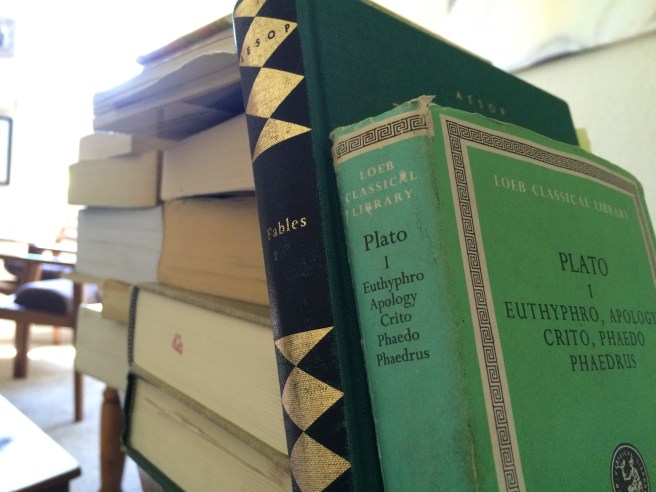
If there is anything anyone knows about Socrates, besides being the great midwife of Western Philosophy, it is that he wrote nothing. I heard it from all of my philosophy teachers and read it in just as many books. “Socrates wrote nothing,” Princeton professor Melissa Lane writes in her exemplary study, Plato’s Progeny: How Plato and Socrates Still Captivate the Modern Mind.  “A man who confined himself to oral discussion,” writes Bertrand Russell in his marvelous The History of Western Philosophy. In the best complete works of Plato in English (which I quote throughout this article), its editor John M. Cooper writes in his introduction, “Socrates himself, of course, was not a writer at all.” There are countless others:

“Socrates wrote nothing himself” (W. K. C. Guthrie in his introduction to his translations of Plato’s Protagoras and Meno)

Socrates “wrote nothing” (Penguin’s edition of The Laws)

Socrates was “enigmatic because he wrote nothing himself” (The Oxford Guide to Philosophy)

“Although [Socrates] himself wrote nothing…” (The Cambridge Dictionary Dictionary of Philosophy)

There are several more I could quote from my library alone, saying more or less the same thing. I have read it so many times I do not even bother to question it. In this piece, I do just that, with surprising results and rich suggestion, throwing new light on the dogma that the historical Socrates wrote nothing. Continue reading

Powers that Be: Could a Bernie Sanders presidency be overturned by the Electoral College?

IMG_0940

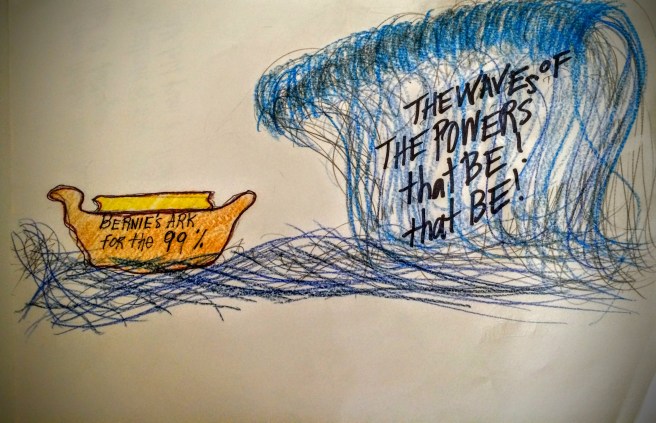
In a previous comment, we suggested that the Electoral College could save the world from a Trump presidency. In this piece, we will suggest that the College could imperil the world by blocking a Bernie Sanders presidency.

We fear that likelihood of the latter is greater than the former. Trump enjoys the backing of the Powers that Be, namely, the wealthy 1% minority that wield awesome power and resources to bend laws and governments and other invisible forces to do its bidding.   Continue reading

On Truth and Appearances

IMG_0933

Philosophy / Pedagogy / Lesson Planning Inspiration

A version of this lecture was delivered May 2014 to graduating eighth grade students. What is printed here is the author’s director’s cut, with minor edits to for clarity. It’s the lecture the author would have liked to deliver, were time constraints not an issue.

For my final lecture of the semester, and as a way of reviewing key concepts we learned this year, I am going to talk about appearances. Particularly, things that have the appearance of truth, but are not really true. Continue reading

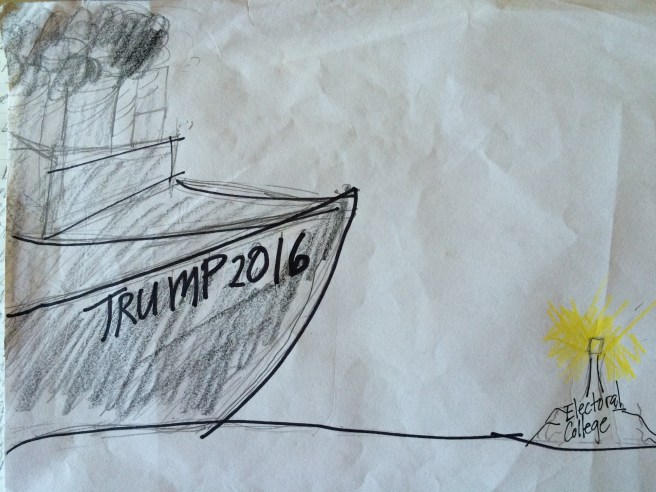
Last Resort: Can the Electoral College save the world from a Don Trump presidency?

IMG_0939.JPG

Many Americans will move to Canada if it happens. The BBC reported in March that it is the top threat to the global economy and US national security. It will do a lot wrong to mother nature and to the female gender writ large. We do not even want to imagine the insult and injury it has in store for the minority populations. On the other hand, after eight years of drought under President Cool, it gives comedians cause for optimism about the future of joke material harvests. It is a Trump presidency, and it has the world on red hot alert.

After New York’s primary this past Tuesday, the red should have gotten redder because Trump has “mathematically eliminated”—to use the phrase in his victory speech—his Republican rivals for the party’s nomination. Continue reading

Hard Evidence: How the case of Will Kemp proves Shakespeare’s authorship

IMG_0931.JPG

As an English teacher, I often have students create dramatic skits on given themes. And often when I read them students occasionally write in their classmates’ names instead of the fictional characters they made up. Once, a student wrote “Mr. Chimski” for “Mr. Chimsee,” an evil prison warden! The rub is understandable: if you are creating characters based on real persons, the mixup seems inevitable in the heat of creation.

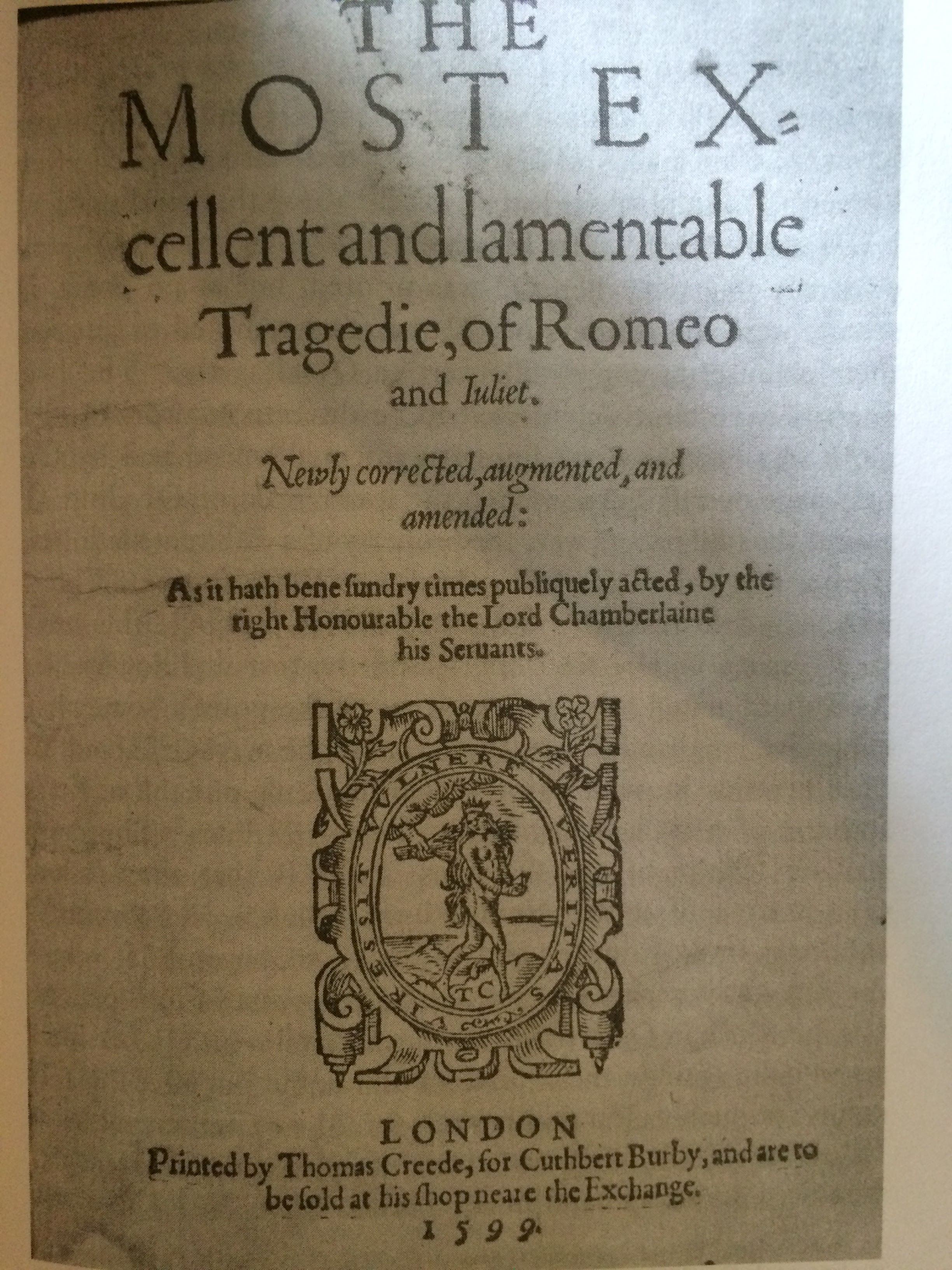
One hard evidence we have for Shakespeare’s authorship can be found in the 1599 edition (the second quarto) of Romeo and Juliet, where at the end of scene 17 a stage direction instructs “Enter Will Kempe.” Kemp is not a character in the play, but a real person for whom Shakespeare wrote the part of Peter the Clown. Shakespeare mixed up the character with the real person. Continue reading